
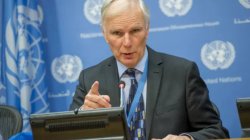
 Here is what Professor Philip Alston Special Rapporteur on extreme poverty and human rights for the UN has to say about poverty in the UK in 2018
I have actually found the original report which is here (Just in case I'm seen to be misquoting)
“ …......While the labour and housing markets provide the crucial backdrop, the focus of this report is on the contribution made by social security and related policies.
The results? 14 million people, a fifth of the population, live in poverty. Four million of these are more than 50% below the poverty line, and 1.5 million are destitute, unable to afford basic essentials. The widely respected Institute for Fiscal Studies predicts a 7% rise in child poverty between 2015 and 2022, and various sources predict child poverty rates of as high as 40%. For almost one in every two children to be poor in twenty-first century Britain is not just a disgrace, but a social calamity and an economic disaster, all rolled into one.
…...............
Although the provision of social security to those in need is a public service and a vital anchor to prevent people being pulled into poverty, the policies put in place since 2010 are usually discussed under the rubric of austerity. But this framing leads the inquiry in the wrong direction. In the area of poverty-related policy, the evidence points to the conclusion that the driving force has not been economic but rather a commitment to achieving radical social re-engineering. Successive governments have brought revolutionary change in both the system for delivering minimum levels of fairness and social justice to the British people, and especially in the values underpinning it. Key elements of the post-war Beveridge social contract are being overturned. In the process, some good outcomes have certainly been achieved, but great misery has also been inflicted unnecessarily, especially on the working poor, on single mothers struggling against mighty odds, on people with disabilities who are already marginalized, and on millions of children who are being locked into a cycle of poverty from which most will have great difficulty escaping.
….............
In addition to all of the negative publicity about Universal Credit in the UK media and among politicians of all parties, I have heard countless stories from people who told me of the severe hardships they have suffered under Universal Credit. When asked about these problems, Government ministers were almost entirely dismissive, blaming political opponents for wanting to sabotage their work, or suggesting that the media didn’t really understand the system and that Universal Credit was unfairly blamed for problems rooted in the old legacy system of benefits. “
The full report is 24 pages long and these are only extracts. Very little of the remainder of the report is any more positive however.


